
The Airline Europe Wrote Off — and Shouldn't Have
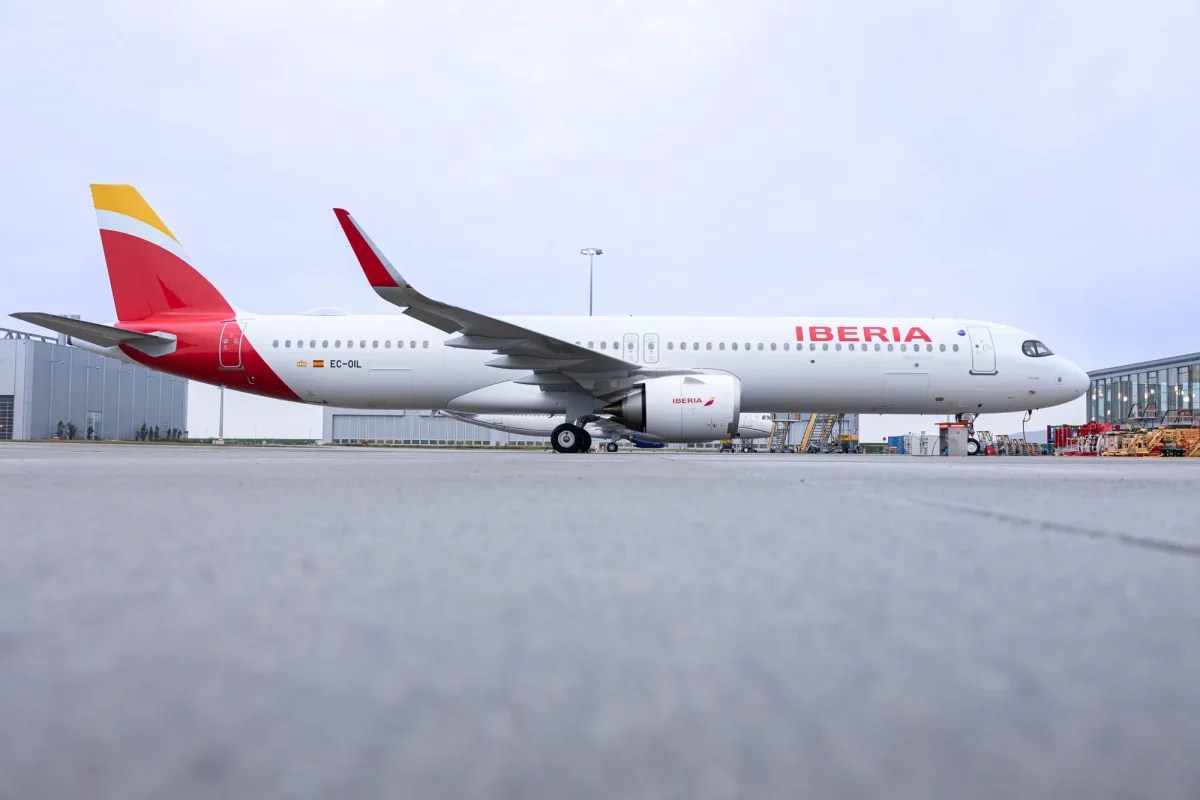
Photo Credit: The first Airbus A321XLR for Iberia. Boeing
Skift Take
Iberia has become one of the world's most profitable airlines — its 16.4% operating margin now rivals Ryanair, completing a decade-plus turnaround from near-Alitalia-level dysfunction.
Subscribe Apple Podcasts | Spotify | YouTube | RSS
Gordon Smith and Jay Shabat, cover two carriers in depth in this episode of the Airline Weekly Lounge.
In part one, they break down Singapore Airlines' strong January–March quarter, where operating margin jumped from 6% to 15%, helped by Middle East airspace disruption pulling traffic away from Gulf hubs like Dubai and Doha, plus continued strength in premium long-haul demand. The conversation pivots to SIA's 25% stake in Air India, which posted a roughly $2.6 billion loss and is dragging down Singapore's net results — framed as the latest in a long history of regretted equity investments (such as Virgin Atlantic, attempted Australian and Chinese deals), driven by SIA's structural anxiety about depending on a single hub with no domestic market.
Part two is built around Iberia as an underappreciated turnaround story: the Spanish flag carrier posted a 16.4% operating margin in 2025, essentially matching Ryanair's 16.7% and making it one of the most profitable airlines in the world. Shabat walks through the journey from 2012, when Iberia was a dysfunctional, overstaffed, A340-heavy carrier getting picked apart by Ryanair amid Spain's housing crisis, through CEO Luis Gallego's aggressive cost cuts, union battles, route rationalization, and refleeting to A350s and A330s.
The margin progression — negative 7% in 2012, back to profit by 2014, 9% by 2019, then 14% in 2023 and 2024 before reaching 16% in 2025 with a remarkable 9% Q1 winter margin — shows the turnaround accelerated well past pre-pandemic levels. They close by noting Iberia is using its new A321XLRs to expand transatlantic routes (Boston, Washington, Newark) and pursue Brazilian traffic to compete with TAP, while debating whether the success is a replicable IAG playbook or partly luck from Madrid being one of the few Western European hubs with room to grow.
Presented by WEX
Watch This Episode
Transcript of This Conversation
This transcript is generated by artificial intelligence.
Hello and welcome to the Airline Weekly Lounge. I'm your host Gordon Smith, and I'm joined as usual by co-host Jay Shabat.
In part one, we're catching up with all the latest news at Singapore Airlines, and in part two, we reveal what's making Iberia one of the industry's most underrated turnaround stories. Hi, Jay, how's it going?
I'm good, Gordon, how's it going?
Doing very, very well. We missed you last week, but your spreadsheet was magnificent. We were using that as the basis for our conversation with Meghna.
Skift Airlines report, of course, a familiar voice to many on the podcast. And it was just sometimes a good old-fashioned spreadsheet.
1:39
Singapore Earnings Snapshot
In this age of AI and all the graphics and all the wizardry and everything else, a simple spreadsheet done well is sometimes all you need to tell the story. So thanks for leaving that little gem behind.
This week, we are turning our attention to two very different carriers, not just geographically, but also in terms of what they do, how they do it.
Singapore Airlines, we're going to not race through in part one, but we're going to cover some highlights, shall we say, from the most recent earnings in part one, because a lot of really interesting story in part two.
That's Iberia, Spanish flag carrier, obviously part of IAG. We were speaking before the show, Jay, and we were just discussing how there are some high-profile turnarounds in the industry, and people know Iberia is doing well.
But I don't think everyone appreciates just what they are doing now compared to where they came from. So that's what we're going to explore in part two.
Let's kick off with Singapore Airlines as mentioned, and you can't really discuss Singapore Airlines these days without discussing Air India. Tell our listeners why that is, Jay.
Yeah. So Singapore Airlines by itself had a very, very good quarter starting year, the calendar year. From January to March, they recorded a 15% operating margin.
That's an excellent number, and there are no doubt that some of that stems from what's happening in the Middle East.
Singapore, of course, competes very closely for traffic flows that with Gulf hubs for traffic flows, like, for example, Europe to Australasia, points within Asia to Europe, etc.
So with that disruption to hubs like Dubai and Doha, Singapore clearly benefited from that, which explains a lot why their margin went up so much.
3:28
Air India Stake Drag
That 15%, by the way, was an increase from only 6%. In the same period last year. So you can see something going on there.
Now, at the same time, they're still enjoying just very strong, long haul demand, premium demand, and Singapore Airlines is kind of known for that. Generally speaking, when premium demand is strong, Singapore Airlines does well.
And as we know from, you know, we've discussed this ad nauseum over the past couple of years, premium demand has been just extraordinarily strong throughout the industry coming out of the pandemic for the past three, four years.
So that's a little bit about Singapore Airlines and its success.
4:17
Why SIA Keeps Investing
But as you mentioned, they also have this kind of ball and chain attached to their leg, and that would be Air India. So Air India, the results from Air India, they own 25% of the airline.
So the results from Air India don't carry over into Singapore Airlines' operating profits, but it does show up on their net results.
And if you look at what we call sort of below the operating line, Air India, do we have the number in front of us, how much money it lost in the...
2.6 billion.
$2.6 billion. So you can see Singapore Airlines is probably thinking to itself, you know, before it goes to bed every night, what the heck did I do?
Singapore Airlines has for decades now, they've just had this insecurity with relying solely on their one hub in Singapore. Remember there's no domestic market in Singapore, just an island.
So it's very dependent on, you know, you have to sing for local traffic, but it's very dependent also on connecting traffic, which can be very vulnerable to competition from other hubs.
They experienced that with the development of the Gulf hubs, you know, starting in, you know, the early 2000s.
So they've always kind of thought to themselves, well, we need to diversify by purchasing a stake in an airline in Australia or an airline in New Zealand or they thought about airlines in China before, that never quite panned out.
Airlines in Europe, remember, they purchased 49% of Virgin Atlantic at one point.
Not with Delta, of course.
Which that stake is now held by Delta, exactly. And every time it had ever bought anything, the Singapore Airlines always winds up regretting it. So it's always been a failure.
Buyers regret it. The Virgin Atlantic deal didn't work out. The Virgin Australia deal.
They bought ANSAT Australia. They, what am I missing? They...
Air New Zealand.
Air New Zealand, which wound up doing well, but their investment didn't do very well.
They at one point wanted to buy parts of China Eastern, a piece of China Eastern, which they're having all sorts of troubles. Interestingly enough, Singapore's interest in Air India goes back decades.
You can go back into the 1990s, and they were already talking about, well, perhaps maybe we need to buy a piece of this. If only we get our hands, we know how to run an airline. If only we get our hands on this thing, we can turn it around.
Well...
I think that's a really important, Jay, point, Jay, just to interrupt briefly here, because there'll be some people who will be mindful of the Vistara partnership, which was obviously presented as Singapore's more modern, clean sheet foothold into
the Indian market, and it got very positive reviews. the Indian market, and it got very positive reviews.
7:22
Vistara Merger Complexity
Generally speaking, they had some nice Dreamliner aircraft, some new Airbus narrowbodies, and this was really presented as the modern face of, yes, domestic to a degree, but also regional and intercontinental flying for the new India, particularly
when Air India was still government owned. You're suggesting, Jay, that the SIA interest in India predates even Vistara.
Yeah, right. They've been interested in India for, like I said, decades, and China.
If you think about the three giant markets they're surrounded by, you've got India with all its people, you've got China with all its people, and then you've got Australia and New Zealand, which doesn't have as many people, but it's a very large
market developed. Even going back years ago, it was already a very well-developed market, a lot of premium, et cetera. So yes, exactly.
So they, back before COVID, they said, okay, Air India, we've been waiting forever for the government to privatize it. They never do. So we're just going to go in and start our own airline.
We'll join with the Tata Group, which is a very large conglomerate, very powerful company in India. And as you suggested, they start an airline called Astara. Yeah, from what I understand, is very well-liked airline, well-respected.
They never really revealed its financial results.
8:43
Air India Headwinds
I suspect it had some good years, some bad years. But in any case, when in 2022, I forget exactly when, the government in India says, okay, we're finally ready. We're going to privatize Air India.
That was when Singapore Airlines said, okay, now you're ready to do this? We're still interested. So they wound up merging Vistara with Air India.
They owned a 25% stake in Air India, as I mentioned. That also, by the way, includes Air India Express and Air Asia India, which was another low-cost area that was kind of folded in to that whole collection there. So you can just imagine.
I think you described it as a magic trick last week in the last issue of Airline Weekly.
I enjoyed that.
Right, I mean, you could just imagine the complexity of bringing together four airlines, and there's a lot of unions involved, and there's a lot of politics involved, and you can almost...
It doesn't take a lot of imagination to understand why Air India is performing so poorly.
9:47
CEO Transition Stakes
Now, obviously, they did have that tragic accident last year. Very sad. No one could anticipate anything like that.
They did have issues with... They couldn't fly over Pakistani airspace. Now, they can't fly over a lot of the Middle Eastern airspace around Iran.
You have the fuel spike. So, you had all these problems just compounding and compounding, and it helps explain why Air India is just kind of back where it started, just having... Because they did invest a lot of money into it.
They repainted the planes. They had all sorts of upgrades to their IT systems, and this reform, that reform.
So, they made a lot of progress, but you can sort of see where they're kind of back to square one now because of all these, you know, just shocks to the system.
Huge progress made in the past two, three years. Vihon AI is the transformation program. Campbell Wilson has been central to that.
He was a former SIA executive Singapore Airlines, particularly the budget subsidiary, Scoot. He's best remembered there in recent years at least, but he was obviously with Singapore before that Jay. He is leaving.
The question is, who in their right mind takes that job knowing that they're inheriting what is a damside better airline than it was, certainly when Campbell took over, but it's still certainly compared to maybe even Indigo.
Well, obviously, Willy Walsh is coming in very shortly. A much more complex operation and arguably with greater interference, let's suggest at a level that you might not have with a privately run carrier in the traditional sense.
I will qualify that straight away because it doesn't matter if your state has stepped back and said, you know what, this is the flag carrier, here you go private sector, do your thing.
You're still going to have people that feel like the flag carrier is the de facto state carrier. So there will be plenty in Indian society and beyond. I experienced this myself when I visited for our Skift India Intelligence Summit in March.
Everyone has an opinion on Air India, even though it's now in the private sector, be it government employees, be it civil servants, be it Joe Public who's flying on the aircraft.
11:56
SIA Wrap and Break
Everyone still feels like it's almost still part of the country in the traditional sense.
So I would caution that any CEO that is taking on that role would have to be hyper mindful of the fact that yes, this is officially now a privately run enterprise, but there is still plenty of opinions at the very least, if not indirect interference
Yeah, it's a tough job for sure.
It's like it reminds me of being the housekeeper at a hotel after the rock band stays there the night before.
And they're just throwing the TV out the window.
Just throwing the TV out the window, trashing everything and then you're in charge of the cleanup. But to be serious, it is going to be extremely challenging position. We'll see who winds up getting that job.
Now, Singapore Airlines will tell you, as they did last week in their earnings, as they presented their earnings, they said, look, we don't regret this.
We still have hopes that we still believe in Air India, that it's going to take a little bit longer than we expected. But we ultimately think that it will be strategically accretive to us, that it will benefit us in the long run. Long run, sorry.
Now, if you hooked them up to a lie detector, gave them some truth serum, would they say that? I don't know. I mean, clearly, it was a very...
If I was an investor in Singapore Airlines, I wouldn't be happy. But they say they're going to stick to their guns and hopefully conditions there will improve and maybe the situation will calm down with Iran and Pakistan, et cetera, et cetera.
So many moving parts, Jay. We will keep an eye on it. There may be people saying, hang on a minute, I thought you were going to speak about Singapore Airlines in this section.
You can't speak about Singapore Airlines without speaking about Air India. But if you do want a bit more detail on Singapore Airlines, Jay's fantastic feature from just last week's issue of Airline Weekly goes into the situation.
There's a bit more detail, both Air India related, but also the broader SIA group. So take a look at that, airlineweekly.com/subscriber.
14:09
Iberia Turnaround Setup
If you're not already a subscriber, you get the back issues as well. So if you've missed something and you want to catch up, you can get all the details there. Jay, anything else to add on SIA before we move into part two?
No, I think we covered Singapore pretty well.
I'm looking forward to talking about Iberia because that is a turnaround story that I'm not sure everybody in the airline, even within the airline, really appreciates.
Oh, that's an exciting introduction to...
Little tease there.
Yeah, I love that. Okay, before Jay gets into part two with All Things Iberia, a quick reminder, if you got any questions or comments for us, send those to podcasts at skift.com. That's podcast with an S at the end.
Please don't forget to follow or subscribe to the podcast, wherever you're listening or watching.
And if you are enjoying the show, give us those five stars, leave us a post review so we can continue to spread the word about the Airline Weekly Lounge. Don't go anywhere, we're talking Iberia right after the break.
Hello, and welcome back to the Airline Weekly Lounge.
15:03
Profitability Like Ryanair
I'm Gordon Smith, joined as usual by co-host Jay Shabat. Part one, we were discussing Singapore Airlines and its questionable investments, most recently Air India. Jay, we are turning now to a more positive turnaround story, if we can call it that.
Iberia, we mentioned at the very start of part one, Spanish flag carrier, a very important part of IAG, which of course owns British Airways and Vueling and Aerolingus and Level, but no one really bothers about that, plus cargo and maintenance and
other bits and pieces. For the purposes of this conversation, we are drilling right down into Iberia. I'll let you decide if you want to go into Iberia Express and all the other wheeze there, Jay.
Give us a scene setter for your justification for your comments at the very end of part one, when you said this was a turnaround that maybe some even in the industry aren't familiar with. What makes it so notable?
Turnaround for the ages, really incredible story. If I start with this comment, I don't think I'll surprise anyone.
The most profitable airline in Europe last year was, we were talking of course about Ryanair being the most profitable airline in Europe last year as it is in most years. But listen to this, Ryanair had a 16.7 operating margin last year.
16:17
From Dysfunction to Reform
By the way, we're talking on Tuesday, they reported their calendar first quarter results yesterday, but we're not talking about that today. Stay tuned for that. We'll have that all written up in the upcoming Airline Weekly.
We're talking about Iberia. So I said Ryanair, 16.7 operating margin in 2025. Iberia's operating margin was 16.4.
So we're talking about an airline that's basically Ryanair-like in profitability. And yeah, just like I said, I'm not sure, maybe I'm mistaken, but I'm not sure how many people realize that it is like a superstar of Europe right now.
And of course, it's part of IAG, which is one reason maybe it's overlooked. You know, British Airways is obviously in that group too. You already mentioned the other airlines in IAG.
So let's go back and I want to remind people just how dysfunctional Iberia was 15 years ago. And I go back 15 years ago because that's when it merged with British Airways. And then shortly thereafter, IAG was formed.
So if you think about where Spain was 15 years ago, so we're talking 2011, you had a big, you know, Spain was at the center of that big European housing bust, you know, after, you know, it started in the US and then it spread to Europe.
Spain's economy was a mess at that time. At the same, you know, all the while, Iberia was, I mean, you know, I remember talking about Iberia in the same breath as our friends at Air India. Sorry, I think we're hitting on them.
But, you know, just a very, you know, dysfunctional airline, you know, Alitalia, Aerolinius, Argentinas, you know, if you had a parade of, you know, troubled airlines.
That's not a beauty parade.
It's not a beauty parade, no. It was, yeah, marching through the bad neighborhood on the wrong side of the tracks.
Hide your eyes, children. Yeah.
Yeah, don't take your children to that parade.
So, and if you think about why, so I mentioned that the Spanish economy was a mess, but then, you know, think about Iberia just with all its, you know, high costs and overstaffing and outdated IT systems and outdated-
Ancient aircrafts.
And old aircraft, that's a very important part. You mentioned a very important aspect right there. Four-engined A340s that were just, you know, fuel guzzlers.
You mentioned all of that competing against these fast-growing LCCs like Ryanair, which, you know, one of the reasons Spain, I think, is their second biggest country market after Italy today. I'm talking about Ryanair.
And one of the reasons why Spain became so big for Ryanair is because they were just relentlessly picking at Iberia's carcass, you know, just attacking, attacking, attacking. And the, you know, Iberia just was, was a real, was a real mess.
I mean, I just want you to, everybody who's listening to just understand where this airline was when British Airways merged it. And by the way, it didn't have any exposure to Asia. Very, very dependent on transatlantic traffic.
Yeah, and I mentioned the, the, the, I already talked about the cost being too high. The branding wasn't particularly, particularly good. So that's where Iberia was.
So in steps, a new CEO named Luis Gallego.
Luis Gallego comes in and just, you know, you could just picture him walking into the Madrid headquarters with a giant axe and he just starts, you know, cutting costs, cutting routes, cutting, you know, just waste, reforming all those things I
mentioned, the sales and distribution, the IT systems, lots of fights with the unions. They had strikes. They had, you know, all sorts of unrest. Very important part of Gallego's turnaround plan was refleeting.
Eventually, it took time, but eventually they got rid of the gas guzzling A340s, replaced them with A350s, some A330s.
20:23
Margins Then and Now
I think they still have some of the older A330s as well. And now they have the 321 XLRs, but we'll hold that for a second. They launched Iberia Express.
I think you alluded to that earlier. That was kind of a low-cost carrier within Iberia.
And then of course they had, later on in the mid-2010s, I think it was, maybe it was a little earlier, IAG purchased Vueling, which also kind of managed some of the low-cost routes within Spain, short haul Spain to Europe, that a lot of these other
LCCs were attacking. So just a ton, a ton of reforms, very aggressive cost-cutting and route rationalization, et cetera, et cetera. Let me move now to the earnings progression.
So in 20, as late as 2012, so a year after the merger, Iberia reported a negative 7% operating margin. Well, that started by 2019. I think the first turnaround year was 2024.
Or sorry, 2014. So 2012, they're still losing a lot of money. By 2020, 2014, they're profitable again.
Not much, but they're profitable again. And then if you trace, and you mentioned my wonderful Excel spreadsheets at the start of our discussion. I was going back digging, we have those spreadsheets.
I've been doing them since 2005. So I was going back to the old Iberia margins over year by year. And you can see after that 2014 turnaround, you can see the margins just going progressively up, 5%, 6%, 7%.
By 2019, they were at 9%. So you can see already, if the world were to have stopped in 2019, which it kind of did in 2020, but if the world had stopped in, you would have said Iberia was a great turnaround story.
But we're just getting started here, Gordon. Yes, we are. We're just getting started because COVID happens 2023, industry is now booming again.
Iberia comes out with a 14% operating margin. 2024, 14 again.
22:51
Madrid Hub and Macro Tailwinds
2025, as I mentioned earlier, they matched Ryanair with a 16% operating margin. This is now one of the most profitable airlines in the world, let alone the second most profitable airline in Europe.
They actually started this year, Q1 of this year, with a 9% margin, which for the off-peak winter first quarter in Europe, is like unheard of. That's, yeah, the OK symbol that you just made is perfect metaphor, perfect explanation.
I was exclusively for our viewers, our listeners would not go there, but yeah. Muy bien.
If you're listening, if you're just listening, you got to be tuning in. You got to see the visual symbols. So you can see Iberia now just performing at the top of its game.
Let me be a little incendiary here, Jay.
Madrid is one of the few European hubs, major European hubs. Let me qualify that for the Western European hubs with room to grow.
How much of Iberia's success is a replicable strategy that IEG can take to elsewhere versus just an accident of having the right airport in the right city at the right time?
Yes. If you wonder, by the way, I described Iberia as this complete mess of an airline in 2011. Why would British Airways want to merge with it?
Well, you just explained it very well. They wanted an airline with an airport that had growth potential, the growth opportunities, the growth capacity. Because as we all know, Heathrow didn't and still doesn't.
And maybe they'll build that third runway, and maybe we'll be hanging out in the old age home together.
Gordon will maybe be roommates in the retirement community, and we'll be talking about, hey, they're going to open Heathrow's new runway in 20 years. We'll see if they're still around.
But yeah, the big reason why British Airways decided to merge with Iberia was that Madrid had all this expansion capacity. So it was a growth play. So yeah, that is one reason for Iberia's turnaround.
But there's a lot more going on, and I'll mention a few others. So if you think about Spain's economy now, I talked about how bad it was 15 years ago. Well, Spain is kind of now the star economy of Europe.
It grew very roughly, something like 3% last year, I think. Maybe it was 2.5 GDP. The rest of Europe, I think the average is 1%.
So it's growing quite a bit faster. And check my numbers of that. That was something from a quick Google search before we started, and just from my memory, having seen World Bank reports, etc.
But I know for sure that Spain is growing faster than the European average. And a big reason is because Spain's gigantic tourism industry has just been booming like crazy.
And if you think about all the Americans that are spending their disposable income on trips to Europe, a lot of that is going to Spain.
People coming to Madrid, people connecting through Madrid to the Spanish, Balearic Islands and the Canary Islands, and even onward through Madrid to Italy or France or whatever. So Spain and Iberia is just capturing a lot of that booming demand.
And I should add that the demand seems to be getting actually even better now since the Iran conflict because a lot of, let's say, people who might have taken a vacation slash holiday in certainly Dubai, but even to a certain extent, Turkey and
Greece, Eastern Europe, Egypt, some of that demand is now diverting back to Western Europe. So, Iberia is capturing, it's like the richer getting richer kind of thing. It's a really strong tourism sector is getting even stronger.
And we'll see how long it holds.
And as you suggest to Jay with that Q1 number of 9%, we've heard anecdotally but also now in the data, not just to Iberia but more generally across the Southern European economies, the shoulder season is extending.
So, whereas previously, you of course would have your June, July, August, your boom months, especially with the school vacations.
27:23
Latin America Strategy
But now you are finding that maybe the retirees, the empty nesters who have got disposable income and they don't necessarily need to travel when the kids are off school, are choosing to visit parts of Europe or elsewhere in March, in April, in
September, October and that is really stretching out. Of course, Iberia is always flowing throughout the year, but they are able to command really decent yields.
If you look at some of the detailed numbers in these shoulder seasons, whereas previously, they would have had to discount a little heavier to fill those aircraft.
So it's a conversation for another day as to the extent of societal change but also climate change and other factors making it frankly, sometimes too hot to visit, say Madrid in the middle of July.
I personally would far rather visit in May, but there are a lot of macro factors as well as internal changes that have taken place that have influenced what Iberia is up to there Jay.
Just one question because I think this will have resonated with a number of listeners is that one flagship route in Tokyo, which you mentioned, disappeared for a while. It came back recently.
But that really is the one up post for Iberia, not just in the Far East, but in Asia more broadly, a little bit going into Africa. Almost everything is going into South America, Caribbean and to North America. Latin America, clearly the crown jewel.
I think I saw a number reading the IAG report recently. It's got around a 20% market share between Europe and Latin America, 18% there or thereabouts depending on the court and what the rivals are up to.
But as we've discussed on the podcast before, that region is volatile. I'm looking at Argentina, Venezuela, the Brazilian currency swings.
Do you think Iberia is almost overexposed to what is currently, yes, a booming market and is clearly reaping the rewards of that? Or is that diversification within South America and Latin America not to homogenize it almost enough?
Yes, there might be some issues in, let's say Venezuela, but then they can move across to Brazil, or if we've got something going on in Colombia, they can pivot across to North America. What is your assessment?
Are you comfortable that, yes, they are really doubling down in the Americas, but there's enough variety within the Americas, quote unquote, for them to be all right and ride out any local storms?
Yeah, I think that was a concern 15 years ago when British Airways bought it, that maybe Latin America could be, because of the economic volatility over time, that could be a liability. I think history has proven anything but.
I mean, it's just consistently been an incredibly strong performer for Iberia, and in the post-pandemic years, everything I just said to the fifth power, just magnify it.
It's been just an extraordinarily successful network for them, and there are some very tangible reasons why, and it's not that South American economies have all been performing extremely well.
I mean, some have, some haven't, but you do have a tremendous amount of immigration from Latin America, and in that sense, it's almost like South America's, or let's call it Latin America's, economic problems have benefited Spain in that sense by
triggering a lot of outbound immigration, and that's honestly a big reason. If you have to, you know, you asked me what are the two reasons, the two biggest reasons why Spain's economy has outperformed the European average over the past couple of
years. One of them is the tourism, but the other has been just a very large influx of immigration, and that just statistically is going to boost GDP, you know, more workers and producing more output. So that has no doubt benefited Iberia.
IAG likes to call, you know, likes to say Madrid is the new Miami. That's where, you know, that's where the immigrants are going, and that's where a lot of the tourists are going too.
And South American tourism to Europe, to Madrid, sorry, and to Spain more generally has been very, very strong as well. And there's been, you know, I think in business investment in both directions. So that's all been just very, very positive.
I saw a statistic in, you know, a recent, maybe it was from a year ago, an Iberia-focused investor presentation, and they showed the growth in premium traffic, and that's both business class and premium economy, the growth in premium between 2019 and
now, and it was something like 30%, like just a crazy, crazy rate of growth. now, and it was something like 30%, like just a crazy, crazy rate of growth.
32:04
More Advantages and XLR Growth
And, you know, you just imagine how profitable those premium seats are. And Iberia, they just did things, you know, very intelligently as far as, and very shrewdly, as far as, you know, what we call the LOPAs, you know, the layouts of the aircraft.
They're A350s, I believe, their economy class is just very, very densely configurated, I think, you know, quite a bit more than most other, you know, other A350s and other fleets.
So they know they have some of that low yield immigrant traffic, for example, that they could pack in the back while monetizing the front end of the cabin, which they've just done a tremendous job of.
So that's, you know, count that all as, you know, as more reasons why Iberia is so successful. And, you know, I have a long list more and I won't bore everybody, maybe we'll do a, you know, a feature story on this one day and we'll go into it.
But, you know, they do have a booming maintenance business. We know how aircraft maintenance, that's very tight supply right now. So if you've got, if you're in that business, you're doing well right now.
They, you know, think about Air Europa, which challenged them on many overseas South Atlantic routes. They had a really hard time in COVID and they actually have it, you know, wound up having to sell part of themselves to Turkish Airlines.
IAG, interestingly enough, wanted to buy Air Europa, but...
Yeah, the deal that never happened.
The deal that never happened, yeah. The competition authorities didn't take too kindly to that idea. And then, you know, Iberia has just been operating really well.
They always, Sirium has this ranking of, you know, who's the most on time airlines in the world, and Iberia, you know, usually winds up on that list.
They do have just their unit costs are a lot lower than if you think of some of their European competitors over to across the Atlantic, Air France and Lufthansa.
Iberia has got a big cost advantage, maybe less so against the Latam, for example, but certainly against the European guys. I should mention that Gallego, I mentioned Mr. Luis Gallego, who was the original engineer of the Iberia turnaround.
He was handsomely rewarded. He is now the chief of the whole IAG empire, right? Is that his title, CEO?
Absolutely, yeah.
It's Sean Doyle and others. I sometimes feel sorry for anyone that's below. When you've got a framework like that, and you could draw parallels with Lufthansa Group, or even to a lesser extent Air France KLM.
Yeah, I'm the CEO of a national flag carrier. Are you really? Because you've got someone in head office in Lufthansa, be it Frankfurt, or be it Paris Air France, or Madrid with IAG same.
You're a CEO with little asterisks, like a subsidiary.
Exactly.
You're not the real power team, are you?
Right. And the current CEO is, what's his name? Marco Sansovini, if I'm saying that right.
He's running the show now at Iberia, and clearly, he's keeping up the... Iberia is still doing a great job, so obviously, he's keeping things up there.
I didn't mention, obviously, they have the joint venture with America and Japan Airlines, too, which is what enables them to get away with that Tokyo route from Madrid, even though the major geography is just very bad for Asia because it's so far
west. But yeah, and now we talked about how they were interested in Air Europa. Remember how IAG was also interested in perhaps buying it to Tap Air Portugal? They've since kind of stepped away from that.
But instead, what they're doing is they're trying to compete for TAP's prized Brazilian traffic using Iberia.
So if you look at Iberia's schedule this summer, I think it is, or I guess the South American winter, they're actually adding two more Brazilian destinations. So they really want a piece of that Brazilian pie as well.
And obviously, because that's Portuguese speaking, there's less of the business connection or the cultural affinities, et cetera.
There's less traffic going between, say, Brazil and Madrid than there is between, let's say, Argentina or whatever on a per capita basis anyway. But they very much are bullish on Brazil. They want a piece of that.
Last thing I'll say, I know we've said a lot on this, but I just am totally fascinated, and I'm pretty sure, I think I could speak for you as well, Gordon, in saying that we're both pretty fascinated by Siberia turnaround.
The last thing I'll just say is they do have those XLRs. I briefly mentioned that before. Those are these new narrow body planes with just, I don't know, 180 some odd seats that...
36:57
Final Thoughts and Signoff
Depends on the config.
Depends on the config.
I think theirs are 180. I saw some 183. I can't remember where those are.
And they have the premium classes and everything. And they're shooting those over to various points in the US. Eastern Seaboard of Boston, Washington, maybe.
They're starting Newark. I think they just started Newark. And then they also, those planes can also do the Northeast of Brazil too, which is another reason why they wanna cultivate some more opportunities in Brazil.
They have a very appropriate aircraft for doing that. So that's another kind of tool in their toolbox for them to exploit their just tremendously strong transatlantic franchise. So there you go, the Iberia turnaround.
Ta-da.
I enjoyed that, Jay. I think we got-
Are you impressed with the Iberia turnaround? I don't think you can't not be.
It's, yeah, whether there will be people listening to this who say, well, they just got lucky, sort of rising tide lifts, old boats, Spain's economy was on the up and some of their other macro factors went their way.
But I do think there has been so much that you cannot argue with, they have done internally to transform this airline. So yeah, all credit to whoever had the foresight to identify that.
Yes, you've got a beautiful new Terminal 4 at, what was the Terminal 4 at Madrid-Baracas, but actually having the airline to match was a real masterstroke.
So I dare say there's going to be a feature story in this, maybe when we are getting into the summer, Jay, and things are going to be slightly sleepier in terms of earnings and other bits and pieces there, but plenty more to discuss.
Really appreciate your insights on Singapore and Iberia. Lots more detail on Ryanair's earnings, as we mentioned at the start of the show, in the next issue of Airline Weekly.
If you're not already a subscriber, go to airlineweekly.com, forward slash subscribe, there you can get a trial issue, and you can obviously get all of the airline news written by Meghna and myself and our broader editorial team on skift.com as part
of that subscription as well as Skift Research and all these other bells and whistles. So check that out, airlineweekly.com. Okay, we got there. Thanks to Jay for joining me this week.
Thanks as always to our producers, John, Monica and Will, and wherever you are in the world, thanks for listening and we'll catch you next time. Bye for now.
Whether you're listening to us on Spotify, Apple, or wherever you get your podcasts, please remember to subscribe, rate us five stars, or leave us a positive review.
This really helps us get the word out about the Airline Weekly Lounge, so we can continue to bring you this podcast every week, absolutely free of charge.
And if you're watching us on YouTube, be sure to subscribe to the Skift channel and hit the notification bell to find out whenever a new video drops.